



For many people with neurodermatitis, summer is not a relief – it's a challenge. While others happily splash in the pool, eat ice cream, and enjoy the sun, those affected struggle with itching, redness, and flare-ups that seem to worsen out of nowhere. As a doctor and founder of KAMI skincare, I know this from my own family: My son Kami had neurodermatitis – and summer was long the most difficult season for his baby skin.
What's behind this phenomenon? And what can those affected do specifically? In this article, I explain the three most common summer triggers for atopic dermatitis, what research says about them – and which simple measures really make a difference.
Why does summer hit neurodermatitis skin so hard? The short answer.
Neurodermatitis – medically: atopic dermatitis – is a chronic inflammatory skin disease based on a disturbed skin barrier. The skin cannot sufficiently store moisture, overreacts to external stimuli, and enters an inflammatory spiral when exposed to certain triggers. In summer, several of these triggers come together at once: heat, sweat, chlorinated water, and sunscreens, which often contain fragrances and synthetic filters.
The result: the skin, which is already under constant stress, is simultaneously burdened from several sides. No wonder itching increases and flare-ups become more frequent.
Trigger #1: Sweat – when the body's own cooling becomes a burden
Sweating is essential – it regulates our body temperature. But in people with neurodermatitis, sweat has a peculiarity: it contains salts, urea, and other substances that further shift the already fragile pH value of the skin and additionally irritate the damaged barrier.
In addition, people with atopic dermatitis sweat differently. A study in the Journal of Investigative Dermatology (Böhm et al., 2019) showed that sweat gland function is altered in neurodermatitis: both the volume and the composition of sweat differ from healthy skin. The antimicrobial protective function of sweat is also impaired, which increases the risk of bacterial secondary infections such as Staphylococcus aureus – a known trigger for neurodermatitis flare-ups.
The pH value of healthy skin is about 5.5 – slightly acidic. This so-called acid mantle protects against germs and keeps the skin barrier intact. Sweat can shift this value and further weaken the barrier function. Those who sweat and do not wash and care for themselves promptly give free rein to these processes.
What helps:
• Shower lukewarm (not hot!) after sweating – ideally with a pH-neutral washing fluid without aggressive surfactants, like the KAMI Nourishing Washing Fluid
• Apply care directly to still slightly damp skin after showering – this locks moisture into the skin
• Wear loose clothing made of cotton or silk – synthetic fibers trap heat and sweat, which increases itching
Trigger #2: Chlorine and salt water – the secret moisture thief
A jump into cool water – that sounds like refreshment and relief. But both swimming pool water (chlorine) and sea water (salt) can cause significant problems for neurodermatitis skin.
Chlorine attacks the skin's lipid layer – that fatty protective layer that is already deficient in atopic dermatitis. A study in the British Journal of Dermatology (Veysey & Higgins, 2017) documented that regular bathing in chlorinated pools measurably worsens the barrier function of sensitive skin. The skin dries out faster, becomes rougher, and reacts more sensitively to further stimuli.
Saltwater can have a similar effect: due to the osmotic effect, seawater draws moisture from the skin – especially in already cracked or inflamed areas, this leads to burning and irritation. However, some studies also show that balneo-phototherapy (salt baths combined with UV light) can be effective in some neurodermatitis patients under controlled conditions – but this is something completely different from a beach visit without a subsequent care routine.
What helps:
• Shower immediately after bathing and rinse thoroughly – even on the beach, a freshwater shower or at least rinsing with brought water is useful
• Care for the skin immediately after drying (gently, do not rub!) – the window of a few minutes after the bath is crucial!
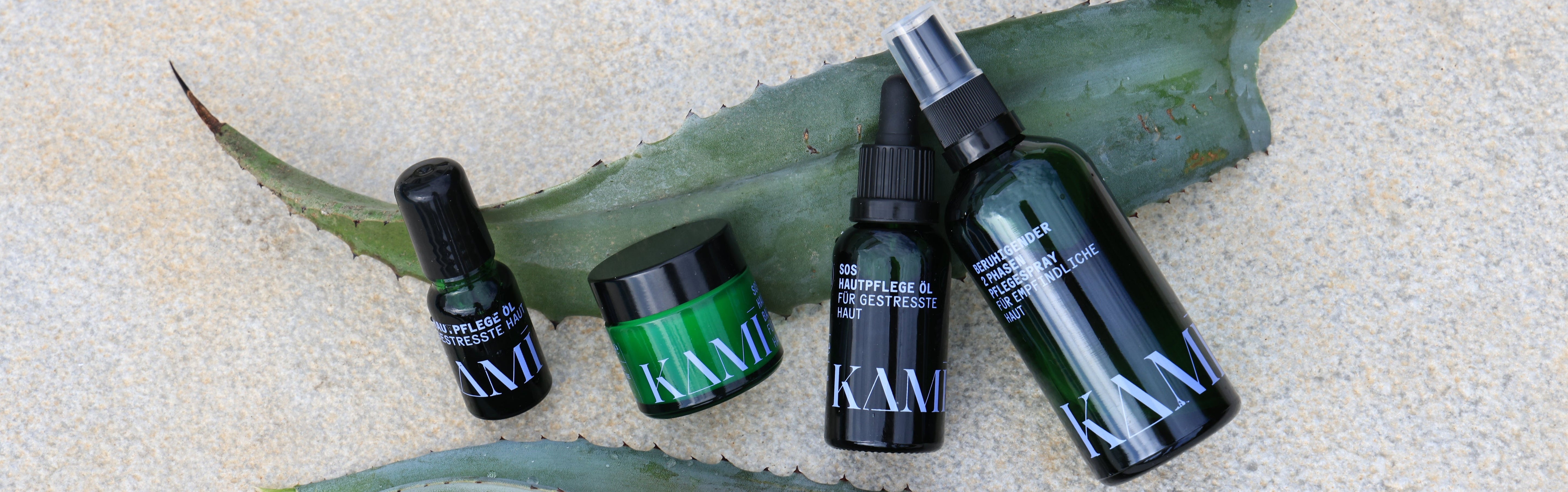
• Light care oils instead of heavy creams: In summer, non-comedogenic oils like the KAMI SOS Skin Care Oil are often the better choice – they absorb quickly, are light, and leave no sticky feeling in the heat.
Trigger #3: Sun protection – necessary, but not always unproblematic
Sun protection is indispensable – especially for sensitive skin. UV radiation can intensify inflammatory reactions and damage the skin in the long term. However, many conventional sunscreens are problematic for neurodermatitis skin: they contain chemical UV filters, fragrances, preservatives, and emulsifying substances, which are known contact allergens.
A review in the Contact Dermatitis Journal (Scheuer & Warshaw, 2012) identified fragrances and certain UV filters (especially benzophenones like oxybenzone) as common triggers for contact allergies in atopic skin. The paradox: the product that is supposed to protect the skin itself triggers a reaction.
The alternative: mineral sun protection based on zinc oxide and/or titanium dioxide. These physical filters lie on the skin and reflect UV rays instead of chemically absorbing them. Studies show that mineral filters are better tolerated by sensitive skin – and zinc oxide also has anti-inflammatory properties that can even be beneficial for neurodermatitis (Gupta et al., 2014, Skin Pharmacology and Physiology).
What helps:
• Prefer mineral sun protection (zinc oxide or titanium dioxide) – without fragrances, without oxybenzone, without alcohol
• Test new products on a small area first before applying them extensively
• Do not apply sunscreen to inflamed, weeping, or open skin areas – this can worsen irritation
What really helps: The KAMI summer care routine for sensitive skin
The good news: with the right routine, summer can also be enjoyed with neurodermatitis. The basic principle is simple: less is more, and consistency trumps complexity.
Cool showers instead of hot baths
Hot water dissolves the skin's natural protective lipids and intensifies itching. A meta-analysis of 13 controlled studies confirmed that daily bathing and showering does not worsen atopic neurodermatitis – if the water is lukewarm (maximum 36–37 °C) and the bathing time is limited to 5–10 minutes. In summer, cool showers can even actively relieve itching, as cold temporarily dampens the nerve fibers that transmit itching signals. In addition, bathing or showering removes allergens from the skin and moisturizes the skin.
Light oils instead of heavy creams
In summer, heavy, greasy creams tend to clog pores and increase the sensation of warmth on the skin – both counterproductive. Light, fast-absorbing care oils, on the other hand, provide the skin with the necessary fatty acids without overloading it. The KAMI SOS Skin Care Oil, for example, contains marmot oil, known for its anti-inflammatory properties, as well as other high-quality plant oils that strengthen the skin barrier – without cortisone and without artificial additives.
Loose clothing made of natural materials
Synthetic fibers and tight clothing increase friction, trap heat and sweat – a direct trigger for neurodermatitis flare-ups. Soft cotton and silk are the most skin-friendly alternatives: they regulate temperature, allow the skin to breathe, and cause hardly any friction. Special neurodermatitis clothing made of certified OEKO-TEX material can be a worthwhile investment for severe flare-ups.
Immediate care after bathing – utilize the time window
Immediately after showering or bathing, the skin is most receptive. Studies show that moisturizing within three minutes of drying significantly increases effectiveness – the skin is still slightly damp and absorbs active ingredients better. This so-called soak-and-seal method is one of the best-documented care strategies for atopic dermatitis (Journal of the European Academy of Dermatology and Venereology, 2022).
The KAMI SOS Skin Care Oil can be added directly to bath water (1–2 droppers are sufficient) or applied to still damp skin – an ideal solution especially for children who are reluctant to apply cream.
An often forgotten factor: Sleep and itching on summer nights
Warm nights are often particularly bad for neurodermatitis sufferers. Heat intensifies itching – physiologically explained by the fact that warmth promotes the release of histamine and other inflammatory mediators. At the same time, lack of sleep itself is a known trigger for flare-ups: it increases cortisol levels, which in turn fuels inflammatory processes.
A study in the Journal of Allergy and Clinical Immunology (Chiang et al., 2021) showed that sleep disturbances in children with atopic dermatitis significantly worsen disease activity – a vicious circle that is further fueled by the heat in summer.
Practical tips for better summer nights:
• Cool the bedroom (close blinds during the day, ventilate at night)
• Bedding made of cotton or silk – no synthetics
• Shower cool in the evening and care for the skin immediately afterwards, e.g., with the KAMI SOS Skin Care Balm
• For children: Scratch mitts or scratch protection bodysuits made of cotton for the night
KAMI in summer: Fewer ingredients, more effect
I originally developed KAMI skincare for my son – out of the need to find a care product that really helps without further burdening the skin with synthetic ingredients. The basic principle that guided me then applies more than ever in summer: less is more.
Our products contain no artificial fragrances, no cortisone, no aggressive surfactants. They are designed to strengthen the skin barrier – with high-quality plant oils that supply the skin with the right fatty acids, and natural active ingredients such as marmot oil, copaiba balm, and organic aloe vera.
Our recommendations for summer:
• KAMI SOS Skin Care Oil: Directly after bathing or showering on damp skin – or directly into the bath water. Light, fast-absorbing, anti-inflammatory.
• KAMI 2-Phase Care Spray: For on the go and in between – combines organic aloe vera with our oil blend, cools and soothes immediately. Ideal for hot summer days.
• KAMI Nourishing Washing Fluid: pH-neutral cleansing without aggressive surfactants – also in summer, also multiple times a day, also on vacation.
• KAMI SOS Skin Care Balm: For particularly dry areas such as elbows, knee bends, or hands – rich and nourishing, even when the skin is particularly cracked after a flare-up. Pleasant for itching, especially at night.
Conclusion: Summer and neurodermatitis – it works if you know how
Neurodermatitis in summer is a challenge – but not an insurmountable one. The three major triggers (sweat, chlorine, and sunscreen) are known and can be defused with the right routine. The most important thing: care immediately after contact with water or sweat, use mineral sun protection, and give the skin what it needs with light, natural care products – without synthetic irritants.
Your body, your skin – it's not broken. It just needs the right support.
All the best, your Kerstin