


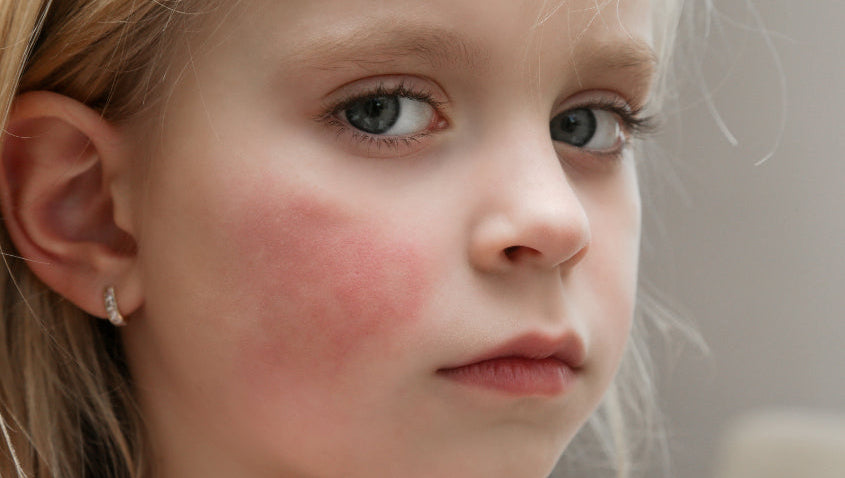
When the days get shorter, the air drier, and heaters turn on, many adults already notice it: their skin feels tight, becomes brittle, and flakes. For children – especially babies and toddlers – these climatic changes can often pose even greater challenges. Their skin barrier is younger, thinner, more sensitive – and reacts more quickly to irritants.
Medical Causes of Increased Skin Problems in Autumn/Winter
To understand why many skin problems appear particularly in the cold season, it's worth looking at the underlying mechanisms:
1. Drop in Humidity & Dry Heated Air
When the outside air gets cold, its humidity drops significantly. Indoors, heating creates dry air. The result: the skin loses more moisture. This increased water loss makes the outermost layer of the skin brittle, porous, and more susceptible to cracks or irritation.
2. Weaker Skin Barrier & Reduced Lipids
In children, the skin is not yet fully "sealed." Furthermore, in cool, dry environments, the production of natural skin lipids (e.g., ceramides, cholesterol, fatty acids) can decrease. A compromised skin barrier then makes it easier for irritating substances (e.g., detergents, smoke, allergens) to penetrate and trigger inflammatory reactions. In dermatology, this is often referred to as a barrier defect – or barrier dysfunction – (this is particularly relevant in atopic dermatitis).
3. Tendency towards Inflammation & Allergies
Some children have a genetic predisposition to hypersensitive skin reactions, for example, due to mutations in the filaggrin gene, an increased Th2 immune response, or a family history of allergies. Even minor stimuli trigger inflammatory reactions that can develop into redness, itching, or eczema (e.g., atopic). Interestingly, studies show that in many children, atopic dermatitis typically worsens or occurs more frequently during the winter months.
4. Increased Contact Irritation due to Rubbing
In autumn/winter, children often wear tight-fitting clothing, multiple layers, hats, scarves – which leads to more friction from fabrics or moisture. Wool materials, coarse fabrics, (hidden) detergent residues, or fabric softeners can thus increasingly irritate the skin.
5. Infections as Secondary Complication
Particularly with a compromised skin barrier, there is an increased risk of bacterial or viral secondary infections – e.g., staphylococci, streptococci, herpes viruses. These infections can worsen the skin condition or cause new complaints.
6. Reduced Sun Exposure / Vitamin D & Immune Modulation
During the darker months, many people experience a decrease in vitamin D synthesis through the skin. Some studies show correlations between lower vitamin D levels and more severe forms of atopic dermatitis. Although this is not a primary trigger, a deficiency could at least promote the tendency to inflammation.
Which Skin Problems Are Common in Children in Autumn/Winter?
Not every skin problem is neurodermatitis. Below is a list of common (and also less well-known) skin changes that can occur in babies and children during the cold season:
|
Skin Problem |
Typical Appearance |
Causes / Mechanisms |
Special Features in Children |
|
Xerosis / Dry Skin (Flaking, Tightness) |
rough patches, fine flakes, tight skin, sometimes slight itching |
increased water loss, deficit of skin lipid-forming substances, dry air |
often the mildest form, can resolve spontaneously without therapy – but potential entry point for more severe disorders |
|
Atopic Dermatitis (Neurodermatitis, Eczema) |
chronic-recurrent eczema with redness, weeping, crusts, severe itching |
genetic predisposition + barrier defect + environmental influences |
usually starts in infancy; seasonal worsening in autumn/winter is common |
|
Seborrheic Eczema / Cradle Cap |
yellowish, greasy scales, often on the scalp, forehead, eyebrows |
overproduction of skin fats + Malassezia yeasts |
typical in infancy; often self-limiting |
|
Pityriasis Alba |
light, finely flaking patches, mostly on the face |
possibly mild inflammatory process, often with dry skin |
especially visible in school-aged children; often cosmetically noticeable (light spots) |
|
Contact Dermatitis / Irritative Dermatitis |
redness, burning, flaking, often where clothing or fabric had contact or on the hands |
fragrances, detergents, clothing materials, friction |
sensitive skin reacts faster — even in areas one might not immediately think of |
|
Lichen, Fungal Infections (e.g., Tinea) |
reddish, ring-shaped, flaking, possibly itchy |
infectious agents (dermatophytes) |
especially with moisture (e.g., due to winter clothing) or in communal facilities |
|
Viral Rashes / Urticaria (Hives) |
wheals, itchy skin redness, possibly acute |
infections, common cold viruses, cold urticaria |
often spontaneous, but if persistent, clarification is necessary |
Note: This overview is not a substitute for a doctor's visit in any of these cases. In rare cases, hereditary skin diseases (e.g., ichthyoses) can also occur – but these typically show clear forms very early on and always require dermatological clarification.
Specifics per Age Group
-
Babies (0–2 years)
The skin is particularly thin, and the development of the skin barrier is not yet complete. Sebaceous and sweat glands only gradually become regulated, so the ability for natural re-oiling and moisture regulation is limited. Studies show that skin moisture in children with eczema is significantly lower than in healthy children. Regular oil baths – also called balneotherapy – can prevent dry skin according to studies.
-
Toddlers & School Children
At this age, children are increasingly exposed to various environmental stimuli – for example, through clothing, sports, school, or the playground. Pityriasis alba, in particular, often becomes visible during this time. Contact dermatitis due to clothing, detergents, or sweat, as well as allergic reactions to nickel or textile dyes, can also manifest in this context.
-
Children with Existing Neurodermatitis
These children often observe seasonal fluctuations in their skin condition: it worsens in autumn and winter. The risk of infections also increases during this time.
Checklist for Parents: How to Recognize Skin Problems
This checklist helps to assess the situation – and to decide whether a doctor's visit is useful:
|
Symptom / Observation |
Assessment |
Recommendation |
|
Only slight tightness, fine flakes, hardly any itching |
mild xerosis |
apply basic skincare, observe |
|
Severe itching, child scratches intensely (e.g., in sleep) |
moderate / potentially eczema |
additional care / barrier protection, if necessary, seek medical advice |
|
Weeping, open sores, crusts, severe redness |
moderately to severely inflammatory |
seek medical clarification as soon as possible |
|
Fever, general malaise, severe spreading or rapid worsening |
indication of infection or severe reaction |
see a doctor or dermatologist immediately |
|
New rash with suspected allergy (e.g., to food, medication) |
potential allergic reaction |
seek medical clarification |
|
No response to consistent care within 1–2 weeks |
therapy-resistant condition |
medical clarification necessary |
|
Co-morbidities such as asthma, hay fever, family history of allergies |
risk factor for atopic diseases |
early dermatological or allergological clarification |
When to See a Doctor or Dermatologist?
- In case of pronounced signs of inflammation, weeping, open sores
- If infection is suspected (pus, fever, severe pain)
- In case of extensive or rapidly progressing skin changes
- If the child suffers from sleep deprivation, severe itching, or distress
- In case of initial manifestation of atopic disease or family history of allergies
- If no improvement occurs despite consistent skincare
We are happy to give you tips on skincare via our consultation at info@kami-skincare.com and recommend a routine tailored personally to you or your child. Unfortunately, a (remote) diagnosis is not possible or permitted. If you are unsure or your child suffers from the aforementioned eczema or infected skin changes, please seek medical advice from your doctor early on.
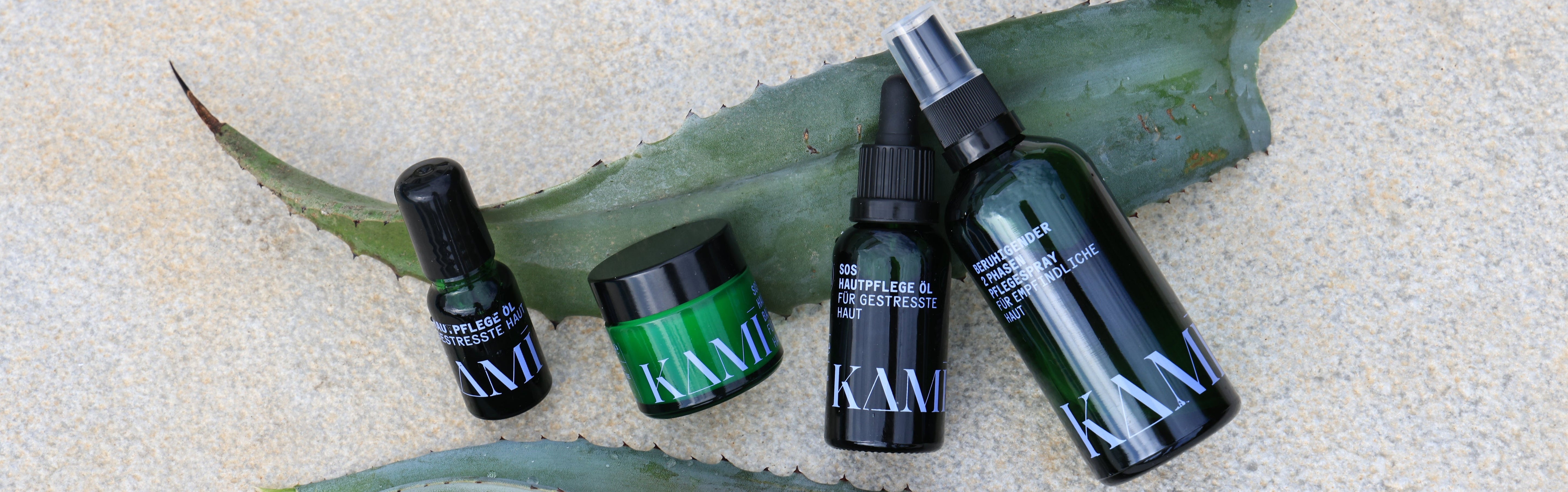
Basic Skincare Routine for Autumn with KAMI Products
To help your child's skin get through the season strong, we recommend gentle and consistent care. Here is an example of a skincare routine with KAMI products:
Morning / During the Day
1. Gentle Cleansing / Refreshment
Use the KAMI Wash-Fluid (only as much as needed) to remove sweat or dirt without drying out the skin. Rinsing with just lukewarm water is also acceptable if nothing was applied before.
2. Moisturizing Care / Spray
Spray on the 2-Phase Spray (shake lightly beforehand).
3. Protective Care
On particularly dry or exposed areas (cheeks, hands), a very light care oil or balm can optionally be applied thinly (e.g., "mini-Spot" from the KAMI SOS Skincare Oil Roll-on).
Consider Clothing / Environmental Conditions
-
- Do not let the humidity in the children's room drop too much (ideal: 45–60%)
- Clothing made of cotton or soft fabrics, no scratchy materials
- No overheating (e.g., due to too many layers)
- Use mild detergents, free of fragrances / residues
Evening / Intensive Care Phase
1. Mild Cleansing / Bath Phase
If bathing is desired, only short (5–10 minutes) in lukewarm water – ideally with the Wash-Fluid or, in the case of eczema, a few drops of KAMI SOS Skincare Oil. For dry skin, punctual cleansing is often sufficient; for atopic dermatitis, in acute cases, we advise a short daily bath to remove allergens.
2. Hydration / Rebuilding
Immediately after patting dry (do not rub dry), spray on the 2-Phase Spray, gently spread (e.g., with hands).
3. Care / Sealing
-
- For all problem areas: Apply a thin layer of SOS Skin Care Oil
- For very dry, flaky areas: Apply a generous amount of SOS Skin Care Balm over it as a final protective layer
4. Night Check & additional care if necessary
If a feeling of tightness or dry spots are still visible in the morning, an additional drop of oil or balm can be applied specifically overnight.
General skin care tips
- Less is often more: Skincare should support the skin, not overload it.
- Apply products sparingly to areas that are still slightly damp (after cleansing/spraying).
- In case of acute inflammation or weeping, use only after consulting a doctor.
- Consistency is key: Daily care shows results after 2-3 weeks.
If you have any further questions, we are happy to help! Write to us at info@kami-skincare.com or call us at +43 676 62908324.
Your KAMI Team